
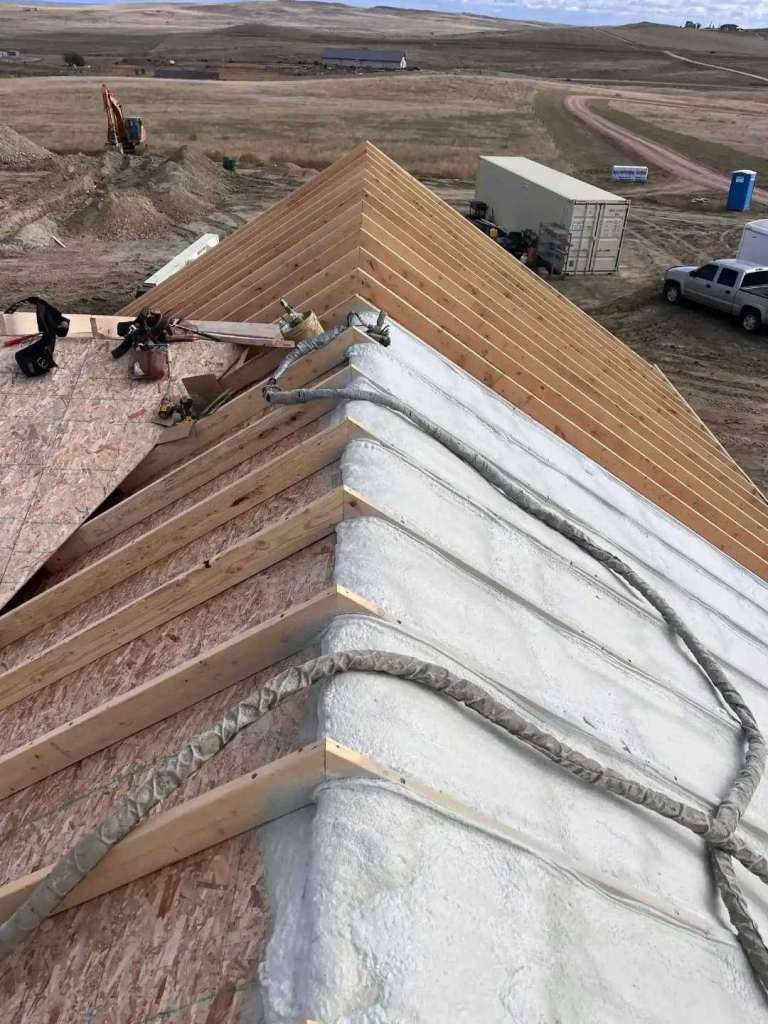
Open Cell vs Closed Cell Insulation Spray Foam
We get a lot of questions about insulation spray foam, especially the difference between open cell and closed cell. On the surface, they can look similar. Once you understand how they behave, the differences become very clear.
Both products insulate. They just do it in different ways, and each one makes more sense in certain parts of the home.
The Physical and Performance Differences
One of the first differences is R value.
Open cell insulation spray foam has an R value of about 3.6 per inch. Closed cell comes in higher, around an R value of 6 per inch. That alone can influence which product makes sense, especially when space is limited.
There is also a noticeable difference in how they feel. Closed cell foam is rigid and hard. It is difficult to press into it with your finger. Open cell foam is soft and flexible. You can easily press into it, almost like a sponge.
That sponge like structure matters. If you were to pour water onto open cell foam, it would slowly pass through. Closed cell foam does not allow water to move through it in the same way. In areas where moisture control matters, that difference is important.
Where Each Type Is Commonly Used
Open cell insulation spray foam is often used in attics and wall cavities when the goal is better temperature control. It works well in standard wall framing and can help stabilize indoor temperatures, especially in rooms that tend to get hotter.
Closed cell insulation spray foam is often chosen when strength and moisture resistance matter. Because it hardens and becomes rigid, it can add structural support when sprayed on the underside of roof decking. In storm prone regions, some homeowners prefer this added rigidity.
Ventilation also plays a role in the decision.
An attic can usually be kept vented with closed cell foam applied to the underside of the roof sheathing. With closed cell foam, existing ceiling insulation can remain in place during the install process. In contrast, with open cell foam, generally an attic will require sealing and encapsulation prior to application of open cell foam. This requires removal of existing attic floor insulation to avoid trapping moisture and possible resulting mold growth.
Choosing Between Cost/Comfort
There’s a cost difference between closed cell spray foams and open cell spray foams. Although closed cell insulation spray foam is more expensive, it provides a higher R value (for insulation) per inch as well as superior moisture resistance compared to open cell.
If the focus is solely on comfort or heat reduction in a room, then open cell would most likely be adequate. If water control, strength or maximum insulation in a confined area is most critical, then closed cell would be the preferred choice.
Ultimately, either option may work well. The best choice varies based on the specific building, climate, and application of the space. Watch the informative video linked to better illustrate the differences between the types of spray and make decisions accordingly.
Discuss Your Choices Prior to Making Your Decision
There is no single option available for insulating with foam spray insulation. The selection of the incorrect type of foam will lead to excessive expenses or long-term issues with water and airflow.
If you are debating whether to use closed cell or open cell in your home, contact the team at Seamless Systems for assistance. We will evaluate your area, describe all your options simply, and suggest an appropriate insulation method that meets your requirements. Please contact us to initiate a discussion prior to making a choice.