
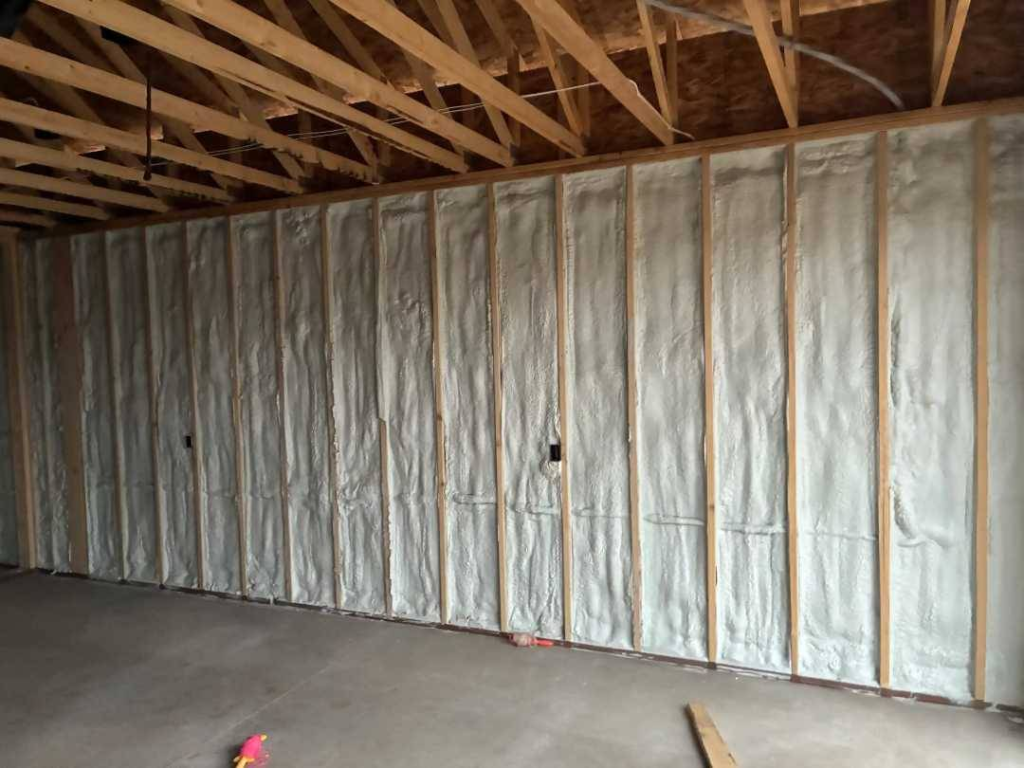
Determining the right spray foam insulation thickness for your attic can be challenging. It depends on the type of foam you’re using, as well as your local building codes and climate. Let’s break it down.
Why Spray Foam Insulation Thickness Matters in an Attic
The thickness of the spray foam in your attic will determine how well it performs. It controls:
- R-value – How much it resists transferring heat.
- Airflow – How little air is getting past.
- Moisture – How little condensation is present.
If too little spray foam is applied, you run the risk of losing heat. This can lead to:
- Higher utility bills – Your HVAC system will be working overtime to maintain your ideal temperature,
- Moisture buildup – Can result in mold.
Too much spray foam can be a waste of money and resources and gives no added energy benefits.
The optimal spray foam thickness in an attic should:
- Provide consistent comfort,
- Enhance the energy efficiency of your home,
- Prevent mold.
Recommended Spray Foam Thickness
- Open-cell spray – Because it’s more porous and offers a lower R-value per inch, it needs to be thicker. Between 6 to 10 inches should keep your attic – and home – well insulated.
- Closed-cell spray – Has a high R-value per inch, so it can be applied thinner. 4 to 5 inches should be perfect for maintaining the temperature of your home.
Roof Deck vs Attic Floor: Does Spray Foam Thickness Change?
The short answer: yes.
- Attic floor – You can get away with a thinner layer of insulation (1 – 3 inches) since the goal is to separate the house from the attic by preventing air leakage.
- Roof deck – You need a thicker layer of insulation (closed-cell spray: 4 – 5 inches, open-cell spray: 5 – 7+ inches) to create a thermal envelope – especially if your HVAC system runs through the attic.
Other Factors that Influence Spray Foam Attic Thickness
- Climate – Colder regions typically require thicker layers of insulation to trap heat for longer, while warmer regions just need a means of creating an airtight seal to keep the hot, humid air out.
Closed-cell spray foam is often the best option – especially in humid climates – because it acts as a vapor barrier, preventing mold and wood rot. - Code compliance – Building codes play the biggest role in how thick spray foam insulation should be in an attic. Homeowners in specific areas need to ensure that their insulation:
- Reaches the mandatory R-value,Is the correct permeability,Follows fire safety regulations,
- Adheres to manufacturer’s thickness limits – insulation may need to be applied in multiple layers.
The Seamless Systems team is ready to assess your attic and recommend the exact spray foam thickness needed to maximize performance without overspending. No guesswork, no shortcuts – just insulation that works the way it should.
Schedule your assessment today and get the results you’re actually paying for.