Choosing the perfect spray foam insulation kit can practically feel like deciding on a color that will paint your entire house! Think about all the different types of kits, the various technical terms involved… and then realize you do not have to be a building science expert to choose wisely!
This guide uses simple talked-about language to help you understand what a spray foam insulation kit is, what to look out for, and how to select a kit that will work with your project(s). If you want to skip the research phase and get straight to the shopping phase, Seamless Systems is happy to assist! Please keep reading for the most straightforward and helpful recommendations.
1) What is in a spray foam insulation kit and what does it actually do?
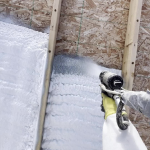
A standard spray foam insulation kit will typically consist of two chemical containers (cans/tanks), an applicator (usually hose), and some basic safety equipment or instructions. When mixed, the two chemicals react, resulting in an expanding foam that fills gaps, and seals leaks. The two most commonly known types of spray foam insulation are open cell and closed cell. Open-cell spray foam insulation is soft, has a very large expansion rate, and is great for sound control as well as for filling small voids and cavities.
The difference between Closed and Open Cell foams is density. Closed Cell foams are denser & have a higher R value per inch than Open Cell foams. Therefore, Closed Cell foams also offer greater structural rigidity & resistance to moisture.
2) Key things to check before you buy a kit
Here are some things to keep in mind:
1. Important items to verify: Foam insulation kits have a coverage area, or “yield”. Kits will specify how many square feet or board feet of insulation each kit will cover at a given thickness. You should realistically assess the number of inches thick layers you will likely need to apply to achieve the desired R-Value.
2. R Value & thickness: This will determine insulation performance. Closed Cell foams provide a greater R-Value per inch than Open Cell foams, so you may need to use less Closed Cell foam insulation to achieve the same overall R-Value.
3. Application Method: Some foam insulation kits provide foam in cans for spot repairs while other kits include two-component foam systems that are designed for covering entire walls and/or even small rooms. If the Kit requires a specific spray gun or extension hose you will need to verify whether you can use them.
4. Moisture & temperature limitations: Most foam insulation will require specific moisture and temperature ranges to properly cure. Check product labels and technical data sheets.
5. Shelf Life & Storage: Foam chemicals can lose their effectiveness if not stored properly and should be checked for expiration or storage guidance on the labels and packaging.
6. Safety and ventilation: Protective eyewear, gloves and proper ventilation are essential safety items when working with foams.
3) Match the kit to your project plus practical tips for success
Small repairs and gaps. For sealing rim joists, around windows, or small cracks use a can based spray foam kit made for spot work. It is easy and fast.
Insulating a garage door, shed, or single wall. Choose a mid sized kit that gives good coverage and check whether it is open cell or closed cell depending on moisture concerns.
Whole room or large area. For large scale projects, a contractor grade kit or hiring a professional is usually the best choice. Mistakes on big jobs cost time and money.
Practical tips: Test on scrap material first to learn how the foam expands. Apply in thin layers rather than one thick pass for better cure and less mess. Keep a sharp knife handy for trimming cured foam. Respect cure times before closing up walls. If you are unsure about structural or moisture issues call a professional.
We Can Help
If you require just a simple set of supplies or if you’re looking for a professional install for a more extensive project, Seamless Systems can assist you. Get in touch with us for friendly advice, quality estimates, and reliable installation.
We can help you with your insulation project. Contact us and request a free evaluation today.