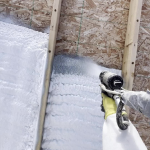
A recent Facebook post about foam insulation spray sparked more conversation than we expected. What started as a quick behind-the-scenes look at a steep roof job turned into a discussion about hot roofs, moisture concerns, and how spray foam should really be applied. The post was inspired by a custom roof project completed for Dan near Moorcroft, and the story behind it is worth sharing.
The question everyone was arguing about: “hot roof”, a real problem or overblown worry?
In plain terms, a “hot roof” happens when insulation and the roofing layers trap heat and moisture instead of letting the assembly breathe. That can accelerate shingle and decking wear or lead to condensation trouble in certain climates and assemblies.
Why this roof was sprayed from the top
Dan wanted the energy efficiency of spray foam but didn’t want to risk moisture problems. Instead of a standard approach, Seamless Systems designed a roof assembly that balanced insulation performance with airflow.
The solution involved spraying foam insulation spray from the top side of the roof, building the system in layers:
- Roof sheeting first
- Vertical boards to create separation
- Spray foam applied between those boards
- A final layer of sheeting on top
About an inch of space was intentionally left between the foam and the roof decking, allowing air to move through the system. Approximately 4-4.5 inches of closed-cell foam created a strong thermal barrier while still supporting ventilation.
The jobsite realities
A few onlookers were surprised by our comment that “foam gets slippery after it sets up” but that’s true. This roof had a steep pitch, so safety gear mattered. The crew used cleats and took extra steps: heaters to get the substrate at the right temperature, and careful monitoring of wind and ambient conditions so the foam would adhere and cure correctly. Those small operational choices make the difference between a good install and callbacks.
The result
After completion, Dan noticed a much better energy performance. If you want to see it for yourself, click the button below and see part of the challenge.
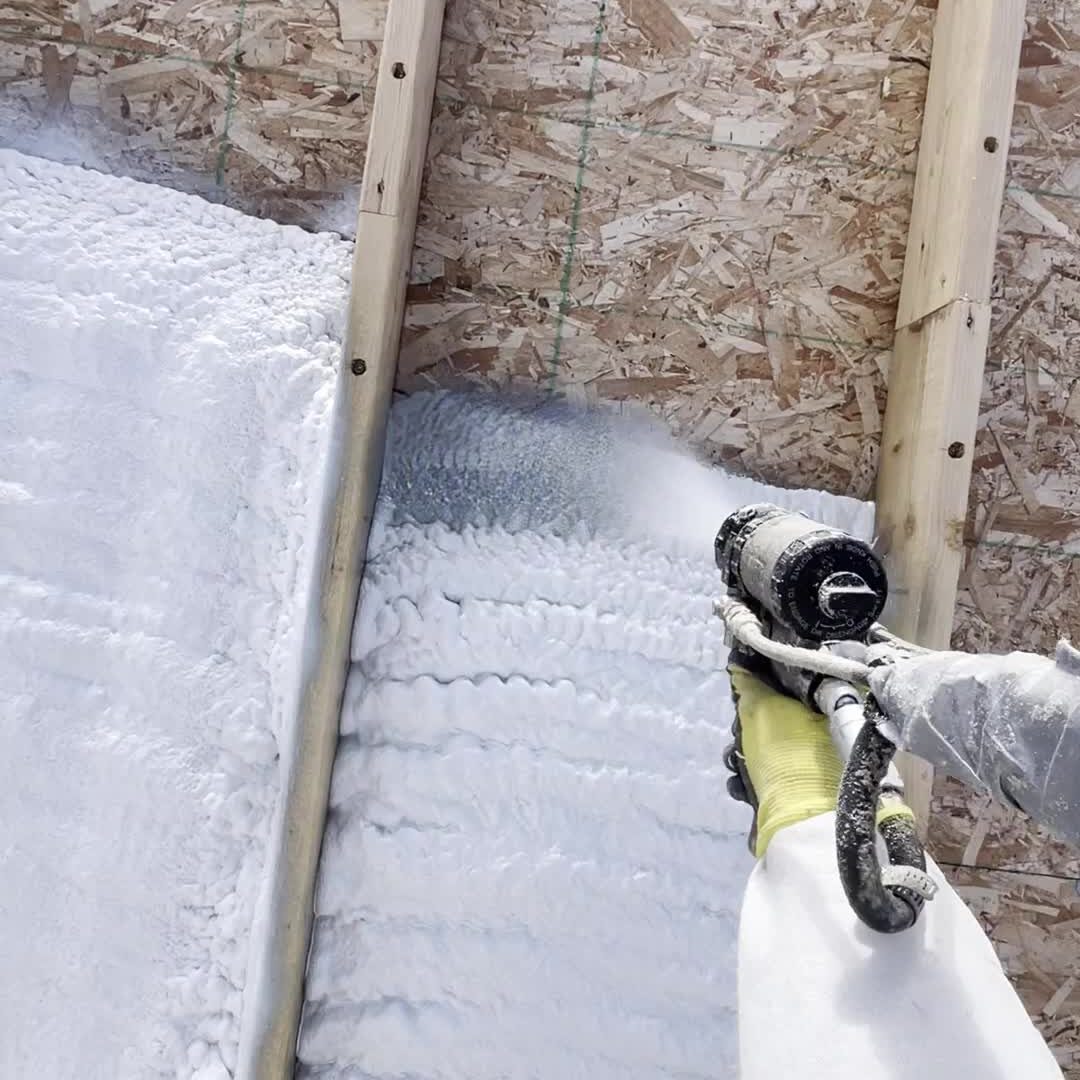
This project shows how thoughtful planning and proper foam insulation spray application can turn a debated topic into a proven solution.
Takeaway for homeowners and pros
- “Hot roof” concerns are context-dependent. They’re valid when assemblies could trap heat/moisture, and they can be mitigated with thoughtful design.
- Closed-cell spray foam is powerful, but how and where you place it matters. Ventilation channels or spacing can let you get the foam’s R-value without risking moisture problems.
- Jobsite safety and material conditions (temperature, wind) are part of quality installation, not optional extras.
Curious what you think: do you worry about hot roofs, or do you lean toward “we’ll cross that bridge if it happens”? Drop a comment on our Facebook thread.
And if you have any new insulation challenges for us, please talk to us directly at Tel: (307) 680-6103.